
Whiteheads
Closed, clogged pores appearing as small white or flesh-coloured bumps beneath the skin’s surface.
 Doctor-developed skin protocols
Acne & congestion
Finding the best acne treatment starts with understanding what is actually driving your breakouts. Your skin type, acne grade, and underlying cause all shape the right approach.
A considered plan begins with a thorough skin assessment.
Understanding your skin
Acne does not only affect teenagers. You may be dealing with persistent blackheads, recurring inflammatory breakouts, or congested skin that feels constantly clogged.
At SkinLab The Medical Spa, our doctor-developed protocols assess your skin thoroughly before any treatment is recommended. The aim is to address acne concerns at the root while helping to minimise the risk of post-acne marks and scarring.
What is acne?
Acne is a chronic skin condition that develops when pores become clogged with excess sebum, dead skin cells, and bacteria. This triggers inflammation that presents as blackheads, whiteheads, papules, pustules, or deeper nodules.
In Singapore’s hot and humid climate, heat and humidity can accelerate sebum production, increasing the likelihood of blocked pores and breakouts. Left unaddressed, acne may lead to post-inflammatory hyperpigmentation and, in more severe cases, acne scarring.
Know the signs
Identifying how acne presents helps determine an appropriate treatment approach.
Closed, clogged pores appearing as small white or flesh-coloured bumps beneath the skin’s surface.
Open clogged pores that appear dark due to oxidation of trapped sebum and debris.
Small, red, tender bumps caused by inflammation in the follicle wall, with no visible pus.
Inflamed papules with a visible pus-filled tip. Commonly referred to as pimples.
Large, painful lumps that form deep in the skin with no visible pus.
Large, painful, pus-filled lesions that sit deep in the skin.
Who gets acne — and why?
Adult acne is increasingly common and may be associated with hormonal fluctuations, stress, diet, climate, or certain skincare products.
Hormonal acne typically concentrates along the jawline and chin, and may shift with life stages or monthly cycles.
Congestion-driven acne tends to appear across the nose and forehead where oil and dead skin cells collect.
Stress-related flares often overlap with hormonal patterns, while diet and product choices may influence the skin.
Year-round heat and humidity keep sebum production consistently elevated, making congestion management an ongoing consideration.
A proper skin assessment helps identify contributing factors so that treatment can be matched accordingly.

Light, exfoliation, and targeted care
may be combined according to your skin’s needs.
Doctor-developed options
Each treatment addresses different aspects of acne. A plan may involve more than one approach, depending on your skin type, acne grade, and root cause. Individual results vary.
Decongest + calm
A doctor-developed protocol using medical-grade AHAs and BHAs to exfoliate, decongest pores, and help manage sebum, combined with Omega Light Therapy.
View treatmentMild acne + oily skin
Papaya enzyme exfoliation and high-frequency therapy help remove dead skin cells, reduce surface inflammation, and assist with oil management.
View treatmentInflammation + pores
Triple-frequency ultrasound technology targets multiple skin layers in one session to help calm congested skin and support collagen production.
View treatmentZero downtime
Medical-grade multi-wavelength LED therapy is designed to address bacterial activity, redness, sensitivity, and surface inflammation.
View treatmentAcne + pigmentation
An FDA-approved Intense Pulsed Light treatment designed to address mild to moderate acne and congestion, as well as pigmentation and redness concerns.
View treatmentTexture + tone
An FDA-approved Lumenis IPL system used for photorejuvenation, addressing mild to moderate acne, pigmentation, and skin texture.
View treatmentNot sure which treatment suits your skin?
Book a ConsultationTreatment details
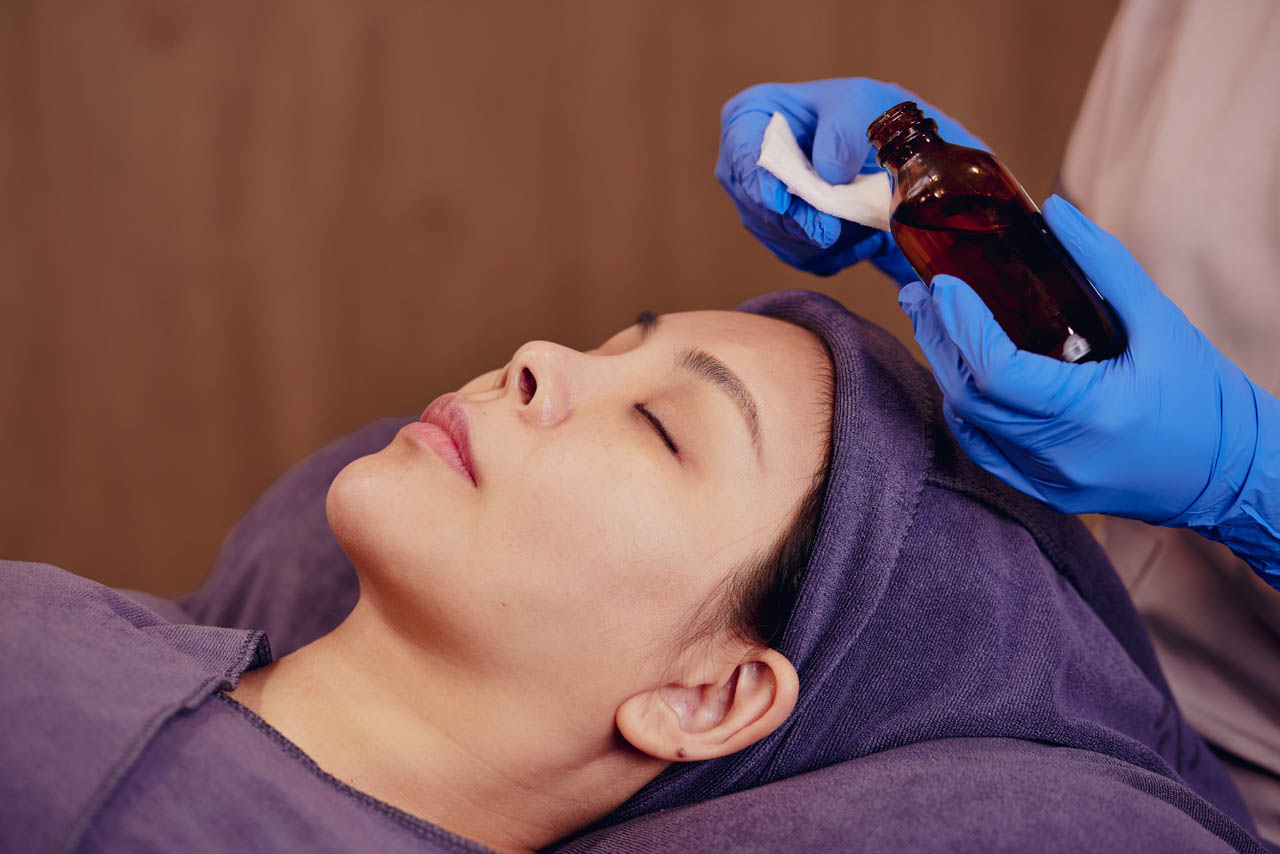
The Signature Medical Peel is a doctor-developed protocol using a customised blend of medical-grade alpha and beta hydroxy acids to exfoliate, help unblock congested pores, remove dead skin cells, and assist with sebum management.
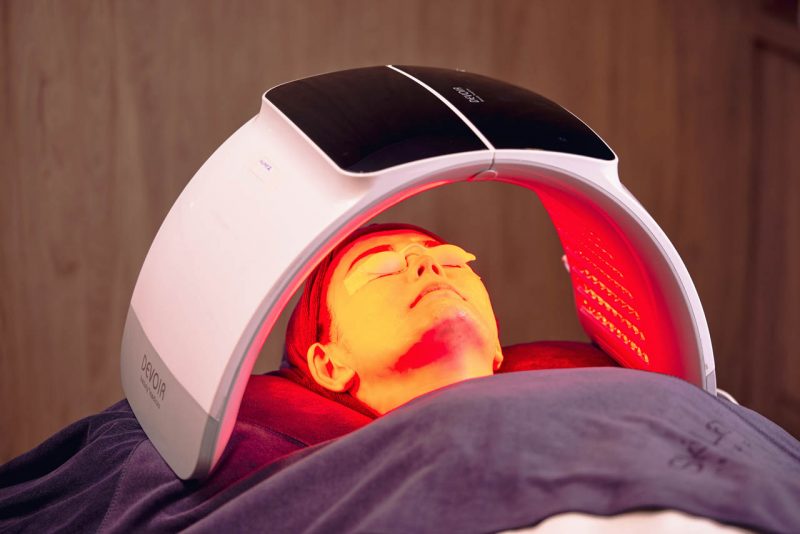
It is combined with Omega Light Therapy. Blue light is designed to target acne-causing bacteria at the surface, while red light supports skin regeneration and may help reduce the appearance of mild acne marks.
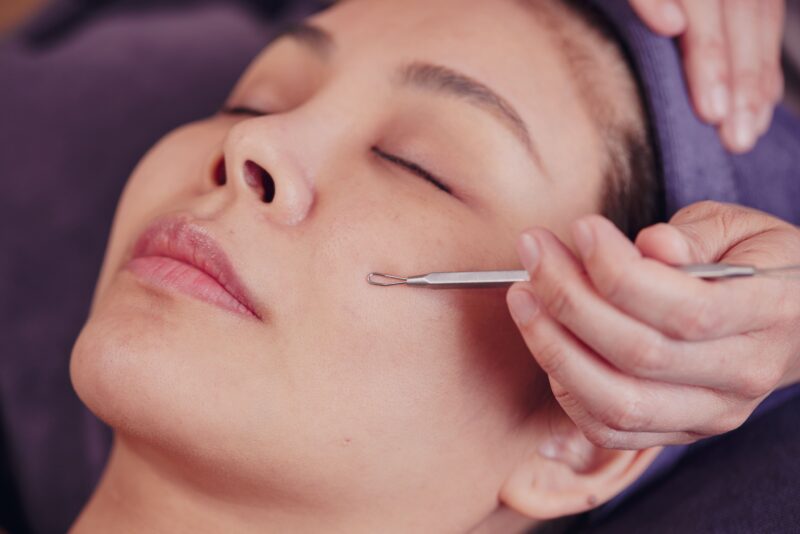
The full protocol includes double cleansing, a customised peel application, extraction, ampoule application, Omega Light Therapy, and a tailored finishing mask.
View treatment pageDesigned for oily skin and mild acne, this facial uses papaya enzyme exfoliation to help dissolve dead skin cells and loosen congested pores, followed by high-frequency therapy to assist with surface inflammation, sebum management, and mild antibacterial action.
It may also serve as a maintenance option between other treatment sessions, depending on your skin condition.
View treatment pageLDM Triple is an ultrasound technology that operates simultaneously at three frequencies, allowing it to target different depths of the skin in a single session. This multi-depth approach is designed to support collagen and hyaluronic acid production, address enlarged pores, and assist with chronic inflammation associated with acne-prone skin.
It is formulated to be suitable for those with sensitive or eczema-prone skin, where more intensive acne treatments may not be appropriate. There is no downtime associated with this treatment.
View treatment pageThe Omega Light Facial uses medical-grade LED light technology across multiple wavelengths, each with distinct intended effects. Blue light is designed to target acne-associated bacteria on the skin surface, red light supports skin repair, and yellow light is intended to assist with redness and sensitivity.
This is a non-invasive, zero-downtime treatment formulated for a broad range of skin types, including sensitive and reactive skin.
View treatment pageClient result
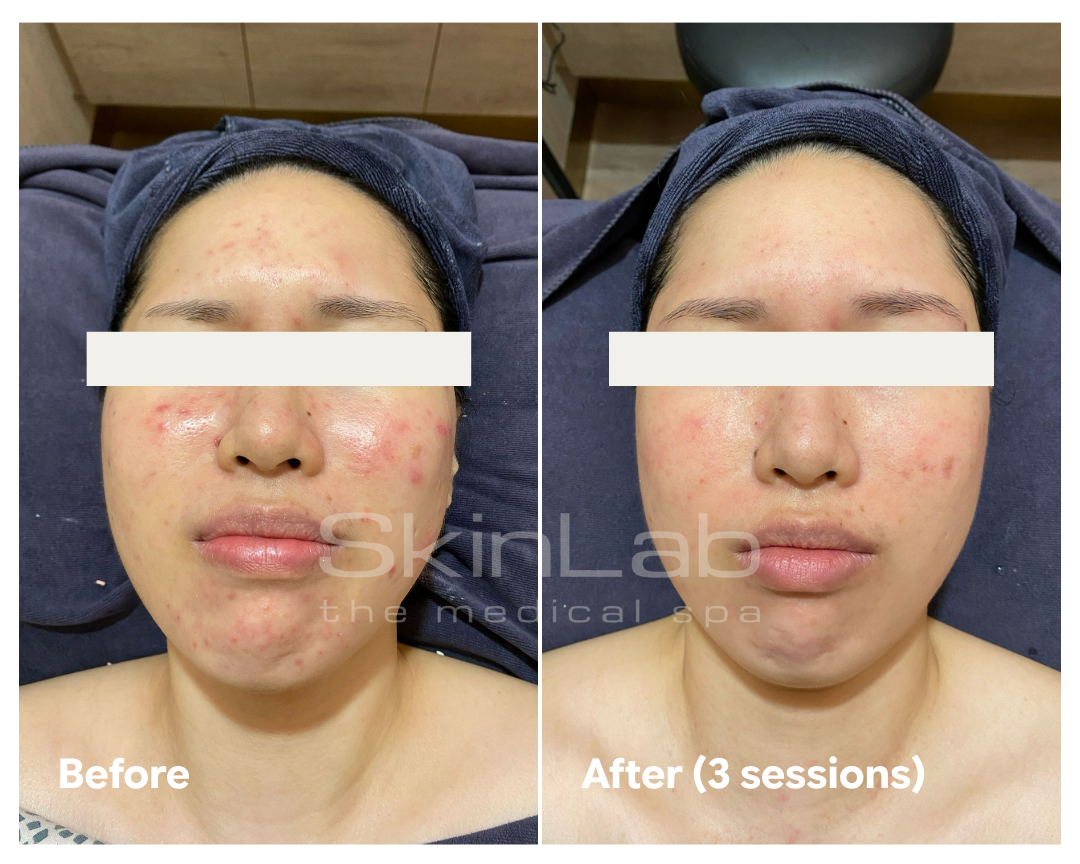
This SkinLab before-and-after image shows one client before treatment and after three sessions.
Individual results vary. A personalised consultation is recommended before beginning any treatment plan.
Between appointments
In-clinic treatments work best alongside consistent home habits.
Cleanse twice daily with a mild cleanser suited to acne-prone skin.
Use non-comedogenic skincare and makeup; avoid heavy oils and occlusive formulas.
Avoid squeezing or picking at breakouts, which may increase the risk of marks and scarring.
Apply broad-spectrum SPF daily, as sun exposure can worsen post-acne marks.
Manage stress where possible and be mindful of diet if you notice consistent triggers.
Frequently asked
Acne forms when sebaceous glands produce excess oil that, together with dead skin cells and Cutibacterium acnes bacteria, blocks the hair follicle. Hormonal activity, stress, diet, climate, and certain skincare products can influence how frequently and severely this occurs.
Singapore’s year-round heat and humidity create conditions associated with increased acne and congestion. Elevated temperature is linked to higher sweat and sebum production, which raises the likelihood of clogged pores.
Skin congestion refers to blocked pores, including blackheads, sebaceous filaments, and milia, without inflammation. Acne develops when that congestion becomes inflamed.
This depends on your skin condition, the type and severity of your acne, and which treatment or combination is recommended. Your therapist will advise on a suitable course after assessing your skin.
Inflamed acne lesions, particularly nodules and pustules, can cause lasting skin changes, especially if picked or squeezed. Consistent, appropriate treatment may help reduce the duration of inflammation and the risk of permanent marks.
Pricing varies by treatment type and course length. Please refer to individual treatment pages for current pricing, or book a consultation for a personalised assessment.
Your skin, considered
Our therapists are trained by our in-house doctors to assess your skin and recommend an appropriate approach.