
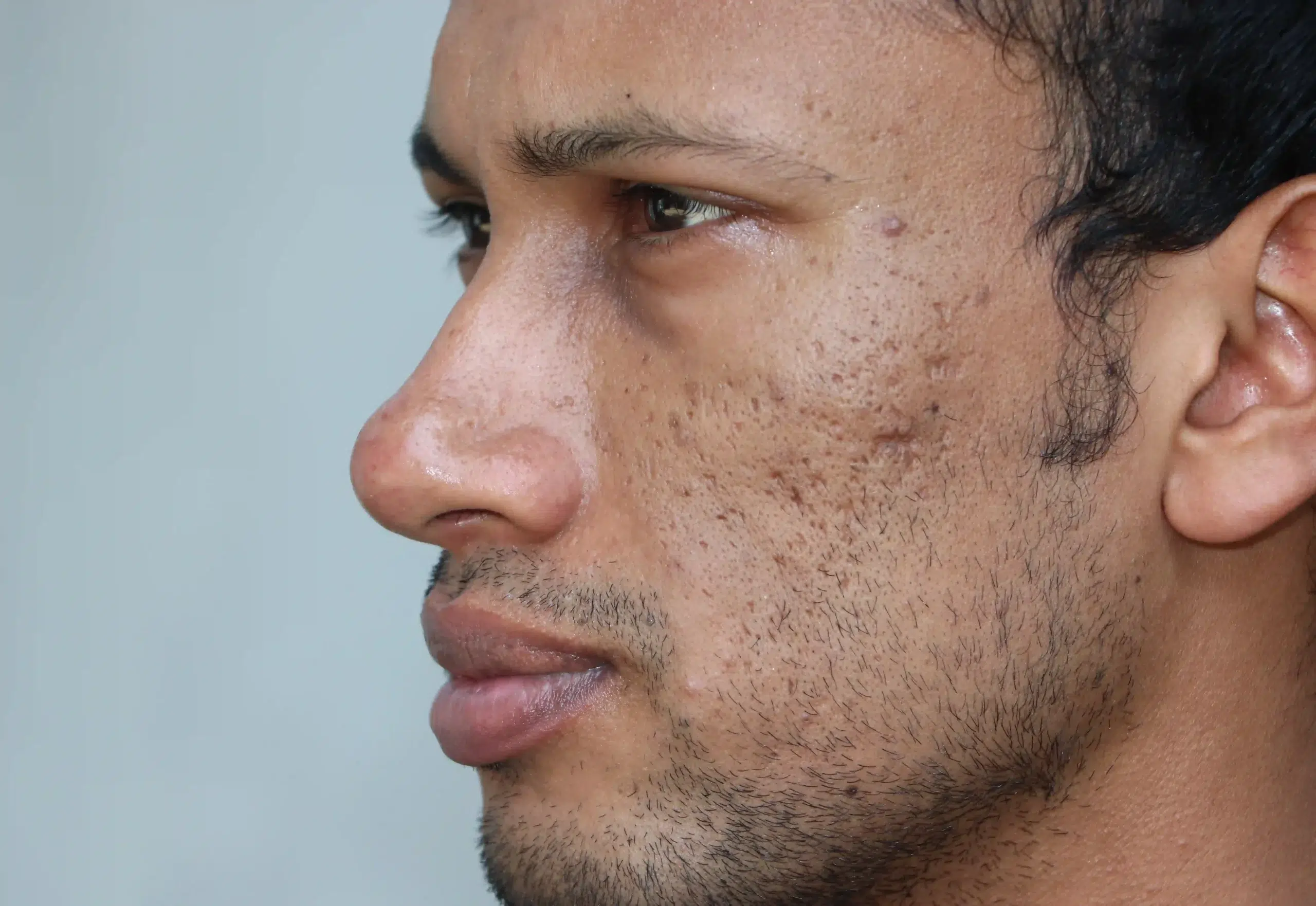
TL;DR
- The key to an effective acne scar treatment for melanin-rich skin is repairing texture without triggering post-inflammatory pigmentation.
- Collagen-boosting therapies ease indents and roughness.
- Gentle peels and low-level lasers lighten dark marks without irritating the skin.
Certain facials and skincare treatments may not address the specific needs of melanin-rich skin, especially when it comes to acne scarring and pigmentation.
So, what should you look for instead? How do you treat both texture and dark marks safely? And which treatments truly support deeper skin tones without causing flare-ups? Read on to find out.
Why Treating Acne Scars in Melanin-Rich Skin Requires a Different Approach
Melanin is the pigment that gives your skin its colour, but it also shapes how your skin responds to inflammation, injury, and heat. In melanin-rich skin, pigment cells (melanocytes) are more active and reactive. This means, when something irritates the skin, those cells produce extra pigment. That’s why many people with deeper skin tones develop dark marks after acne, even when the breakout itself was mild.
Dermatologists classify skin reactivity using the Fitzpatrick Skin Type Scale, which groups skin into six categories based on how it behaves in the sun:
- Type I-II: Very fair skin that burns easily
- Type III-IV: Light to medium-brown skin that tans gradually
- Type V-VI: Deeper brown to dark skin that rarely burns and tans quickly
How Texture & Pigment Work Together
When we talk about melanin-rich skin in acne scar treatment, we’re referring mainly to Fitzpatrick Types IV, V, and VI. These skin types have:
- A higher risk of post-inflammatory hyperpigmentation (PIH)
- More sensitive to heat-based or aggressive resurfacing treatments
- A greater chance of developing dark marks or uneven pigmentation after irritation
- Different healing patterns compared to lighter types
For tailored advice on treating acne scars safely in melanin-rich skin, book a consultation at SkinLab The Medical Spa.
Understanding Your Scar Type & How To Treat It
Acne scars usually fall into two broad categories:
- Texture: Dents, bumps, or unevenness in the skin’s surface.
- Tone: The colour left behind, like dark marks, brown patches, redness, or blotchiness.
Most people have a mix of both, and they often don’t respond to the same treatments.
Treat Texture and Tone Separately, Then Together
1. Start by identifying the dominant issue.
- If your concern is indented scars (ice pick, rolling, boxcar), you’re dealing with texture.
- If your scars look brown, purple, or red, that’s either PIH or post-inflammatory erythema (PIE).
2. Treat each issue with the tools that work best for it.
- Treatments that stimulate collagen and remodel the deeper layers of skin are recommended for texture issues.
- For tone issues, treatments that target pigment or calm surface inflammation.
3. Combine treatments once the skin is stable.
After you’ve addressed the main issue, your skin can tolerate combination sessions for balanced and lasting improvements.
Common paired approaches include:
- Subcision + RF microneedling
- RF microneedling + pigment laser
- Light fractional resurfacing + pigment control
Treatments for Darker Skin Tones
Acne scar treatment for Fitzpatrick Types IV- VI requires a dual focus: not only on improving skin texture but also on preventing new pigmentation while treating existing scars. Here are some that we offer at SkinLab that are also suitable for melanin-rich skin.
Skin Booster Microneedling
Another treatment for acne scars is our IYASHI Exosome Nano Needling Treatment which combines microneedling with stem-cell-derived exosomes, sourced from Japan, to support collagen repair and calm inflammation.
Key Benefits:
- Supports healing with minimal irritation
- Aids recovery from texture-focused scar treatments
- Reduces the likelihood of PIH flare-ups
- Enhances skin texture and resilience over time
Melanin-Safe Chemical Peels
We also developed a gentle chemical peel to treat acne scars in darker skin tones. Our Melasma Peel Facial blends medical-grade AHAs with brightening actives to lighten excess pigment for Fitzpatrick Types IV-VI. Anti-inflammatory botanicals such as aloe vera and cucumber extract help keep irritation to a minimum.
Key Benefits:
- Fades PIH, dark marks, and uneven pigmentation
- Encourages cell renewal for a clearer complexion
- Helps even skin tone during scar treatment
- Softens fine lines while maintaining hydration
- Calms inflammation to minimise PIH risk
Lasers
Our Laser Lift Facial is a pigment-safe treatment for acne scars, using a 660nm low-level laser to stimulate collagen, calm inflammation, and support cell repair without triggering PIH.
Paired with galvanic current for hydration and ingredient absorption, and lymphatic drainage to reduce congestion, it helps melanin-rich skin recover more evenly from acne scars.
Key Benefits:
- Stimulates collagen for firmer skin
- Helps lighten acne-related pigmentation
- Supports healing without aggressive heat exposure
- Improves hydration and overall skin quality
- Reduces puffiness and congestion that can worsen inflammation
- Enhances results when paired with scar-remodelling treatments
Book a Personal Consultation At SkinLab
Acne scars can be more stubborn in deeper skin tones, but with the right approach, they can fade. Book a consultation at SkinLab for a skin assessment and acne scar treatment plan.