
Summary:
- DIY gua sha can cause issues like bruising, inflammation, and skin barrier damage if done with excessive pressure or incorrect technique
- Common mistakes include using the wrong angle, performing it on dry skin, overusing the tool, and poor hygiene
- DIY gua sha may worsen certain skin conditions such as sensitive skin, active acne and pigmentation
- Professional gua sha is generally safer and more effective due to practitioners’ anatomical knowledge and proper technique
In Singapore and across many Asian cultures, gua sha is a well-known practice rooted in Traditional Chinese Medicine (TCM) techniques. Today, facial gua sha has gained even more attention through online platforms, with countless demonstrations for quick and easy at-home routines promising a snatched jawline. Many of these videos showcase gua sha before and after results, often highlighting visible de-puffing and contouring effects after just a few sessions.
While beneficial, gua sha requires a level of expertise for people to reap all its benefits.When performed incorrectly, it can end up causing skin irritation and other concerns, especially on the delicate facial area.
In this article, we’ll explore how gua sha works on the skin, the common mistakes with DIY use and why you should consult a professional.
What Is Gua Sha?
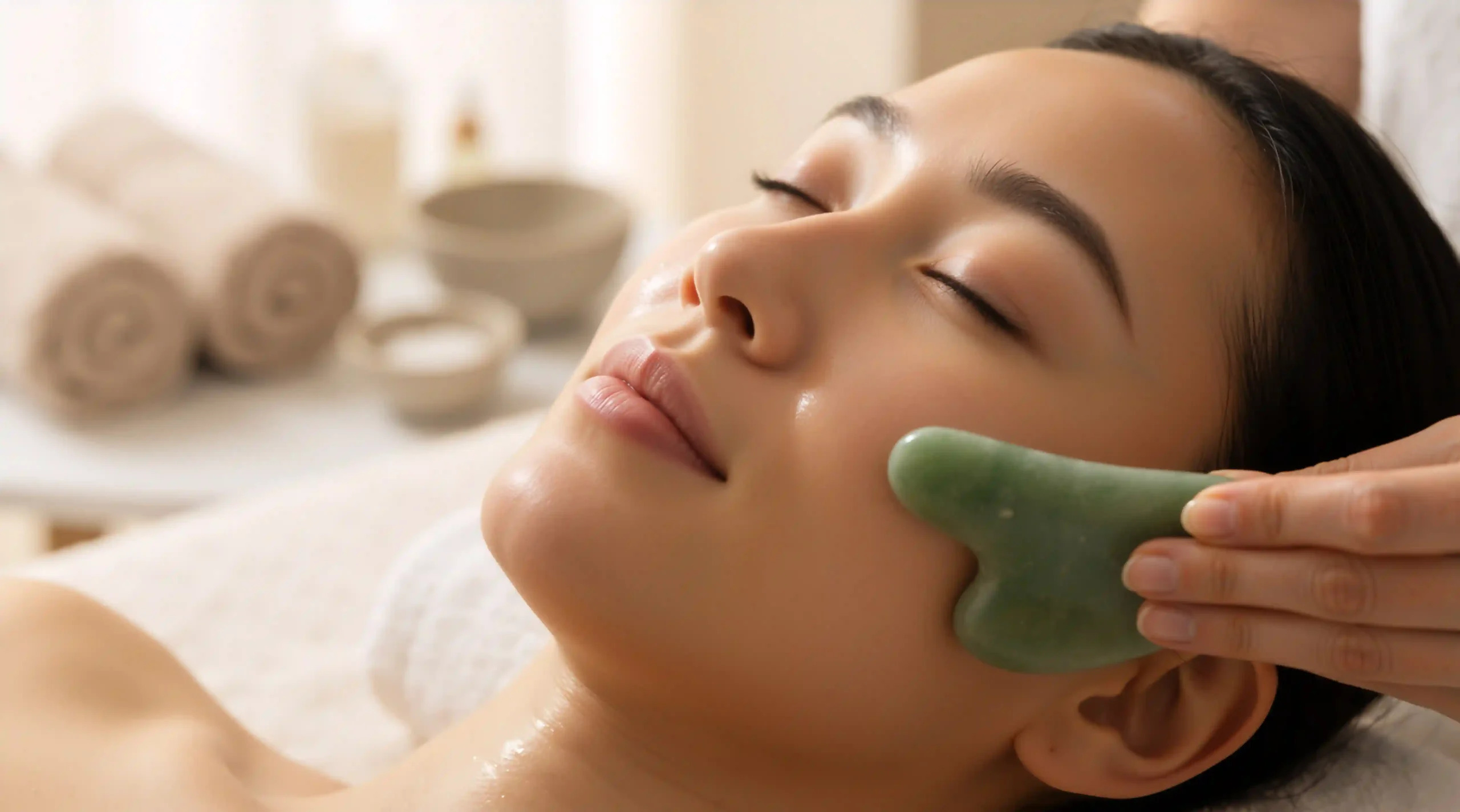
Gua sha involves traditional techniques that use a smooth-edged tool (often made of stone, such as jade or quartz) to gently stroke or “scrape” the skin in repeated motions. This practice originates from traditional East Asian practices, where it has been historically used on the body to support circulation and relieve muscle tension.
How it works on the skin and tissues
For facials, gua sha is performed with lighter pressure and in specific strokes along the contours of our face and neck. These movements create gentle stimulation on the skin, directed along lymphatic pathways.
In turn, this creates a more contoured and refreshed appearance. However, it’s important to note that results vary and are dependent on technique and each individual’s skin response. While gua sha before and after images can illustrate potential improvements, they may not always reflect typical or long-term outcomes.
Why it’s become popular for facial use
Because of the almost immediate de-puffing and facial definition benefits, gua sha has become a staple in many at-home skin care routines. When used correctly, gua sha can:
- Encourage lymphatic drainage — The lymphatic system does not have its own pump and relies on external movement. The stroking action helps guide fluid through lymphatic vessels, which may temporarily reduce fluid retention and puffiness.
- Improve superficial blood circulation — The pressure applied to the skin causes superficial blood vessels to dilate, increasing local blood flow. This can give the skin a temporary flushed or more radiant appearance.
- Relieve muscle tension in the face — Repetitive gliding over facial muscles may help release areas of tension, particularly in the jaw and cheeks, contributing to a more relaxed appearance.
What Happens When You Use Too Much Pressure
Applying too much pressure during facial gua sha is one of the most common causes of adverse effects. Unlike the body, facial skin is thinner and more delicate, making it more susceptible to injury when force isn’t properly controlled.
Bruising or petechiae on face
Our skin contains a dense network of small blood vessels, making it more prone to visible bruising when ruptured. This could lead to bruising or pinpoint red or purple spots known as petechiae.
It’s also important to be extra careful around the eyes and cheeks, where the skin is thinner and bruising is more likely to occur.
Inflammation and swelling
Rather than reducing puffiness, putting too much pressure during your gua sha massage can worsen fluid retention and make the skin appear more irritated.
This is because excessive mechanical stress on the skin can activate an inflammatory response, causing the release of signalling molecules that increase blood flow and vascular permeability.
Skin barrier damage
Repeated friction or pressure can disrupt our skin barrier, which plays a key role in protecting our skin from external irritants and retaining moisture. This can cause increased sensitivity, skin dryness and a higher risk of breakouts.
Other Common Gua Sha Mistakes at Home
Over the years, gua sha tools have evolved and now come in many shapes and sizes, all designed to follow the natural contours of the face for smoother, more controlled movements. However, using the tools wrongly can also lead to skincare mishaps.
Wrong angle and scraping direction
Gua sha tools are created to glide along the skin at a low angle, following our face’s natural contours and lymphatic pathways.
Using tools on dry skin
Gua sha should be performed on well-lubricated skin using oils, serums or moisturisers. Using the tool on dry skin increases friction, which can damage your natural skin barrier and cause irritation.
Overuse and excessive frequency
Sometimes, more doesn’t necessarily mean better, and that applies to gua sha too. Overuse can increase skin sensitivity and inflammation, especially when you don’t give your skin time to recover.
Poor tool hygiene
Unclean gua sha tools can accumulate oil and bacteria, increasing your risk of breakouts and irritation. Clean your tools regularly to reduce your risk of breakouts.
Skin Conditions That Can Worsen with Gua Sha
Although gua sha is suitable for some individuals, it may not be the best idea if you have certain skin conditions, particularly where the skin is already inflamed or sensitive.
Rosacea and sensitive skin
If you have rosacea or sensitive skin, gua sha may trigger flushing or increase skin redness. The added friction and pressure can also overstimulate your sensitive skin, potentially causing more irritation and worsening skin sensitivity.
Active acne and inflammation
If you have active acne, using gua sha over affected areas can aggravate inflammation and spread bacteria across the skin. This can lead to more breakouts and delayed healing.
Pigmentation-prone skin
If you are prone to pigmentation, excessive pressure or irritation from gua sha may trigger post-inflammatory hyperpigmentation (PIH). This is especially relevant for darker skin types, where even mild inflammation can cause longer-lasting marks.
Professional vs DIY Gua Sha
While gua sha may appear simple, there are key differences between at-home use and treatments performed by trained practitioners that can make or break your skincare outcomes.
Knowledge of facial anatomy
A trained practitioner has a better understanding of our facial anatomy, including lymphatic pathways and more delicate areas of the face. A trained gua sha technician knows where to apply pressure and how to move the tool precisely, reducing unnecessary strain on the skin.
Controlled technique and safety
In a professional setting, gua sha is not a one-size-fits-all approach. Massage techniques are adjusted based on your skin type and concerns, with careful control over pressure, direction and frequency to minimise irritation.
Lower risk of skin damage
Professional treatments are generally less likely to cause issues such as bruising, inflammation or disruption of the skin barrier compared to unsupervised at-home use.
Considering Facial Treatments? Speak to a Professional
If you’ve been exploring gua sha before and after results online but are unsure what is suitable for your skin, a professional consultation can help you better understand what to expect.
At SkinLab, we offer both the Gua Sha Facial (90 minutes) and the Gua Sha Eye treatment (50 minutes), each designed to support sensitive skin types. Armed with a medical understanding of facial anatomy and lymphatic pathways, our therapists draw on Traditional Chinese Medicine techniques to enhance circulation and reduce puffiness, while also considering individual skin health.
Before doing any procedure, they will examine your face and what it needs. If necessary, they’ll recommend another treatment.